
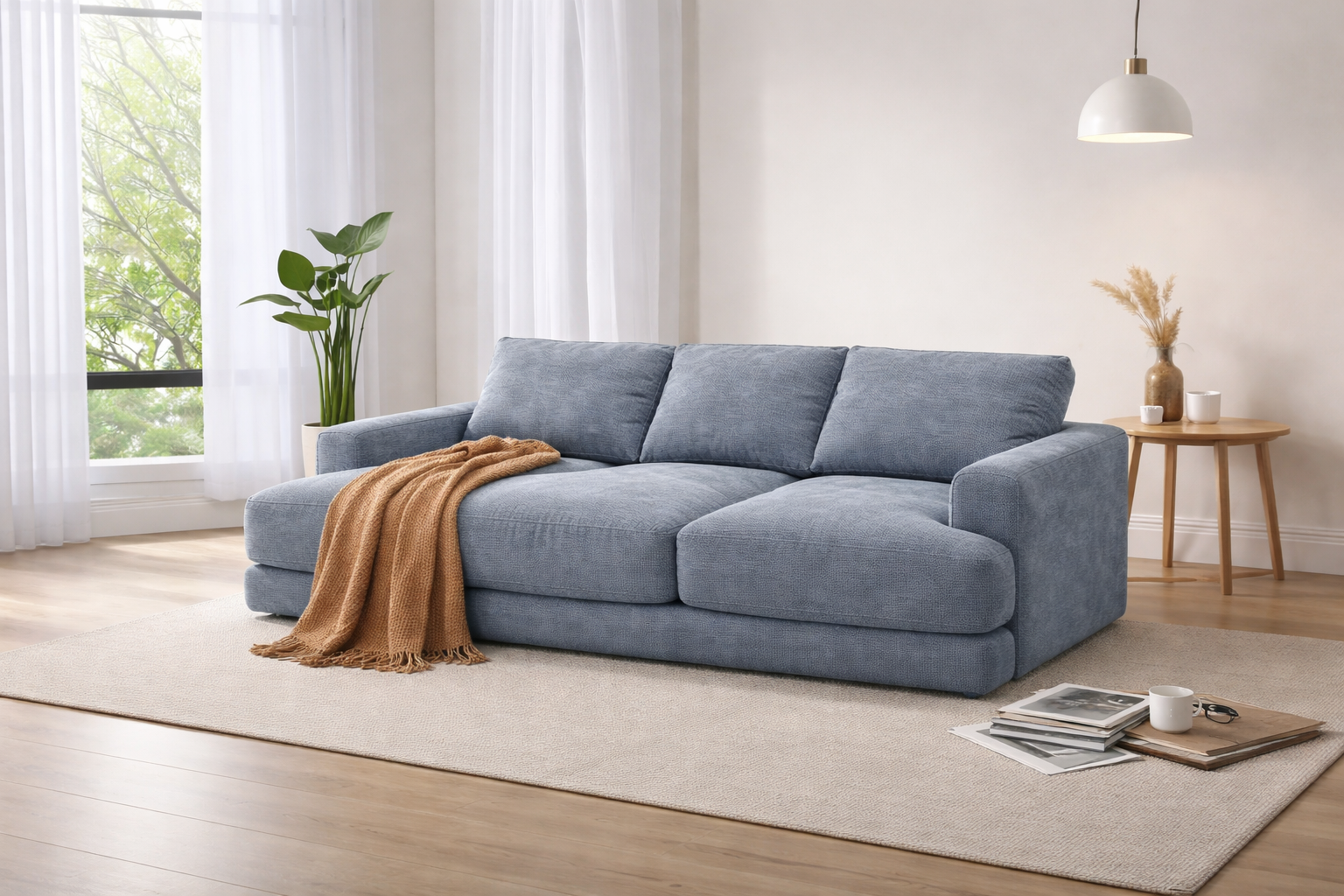
Not long ago, I watched a full-size sofa emerge from a box small enough to fit in the trunk of a sedan. No tools. No delivery crew. Just a knife cutting open plastic, followed by foam slowly expanding into something that—at least visually—looked like a proper couch. That moment captures both the appeal and the confusion surrounding Boneless Sofas.
They promise to solve real problems: tight doorways, narrow staircases, expensive delivery fees, and the general inconvenience of traditional furniture. But once the novelty wears off, a more practical question remains. Are Boneless Sofas a genuine evolution in furniture design, or are they simply a clever workaround dressed up as the next big thing?
This review looks past the viral hype and examines Boneless Sofas as they actually function in real homes.
What Boneless Sofas Are (and What They Aren’t)
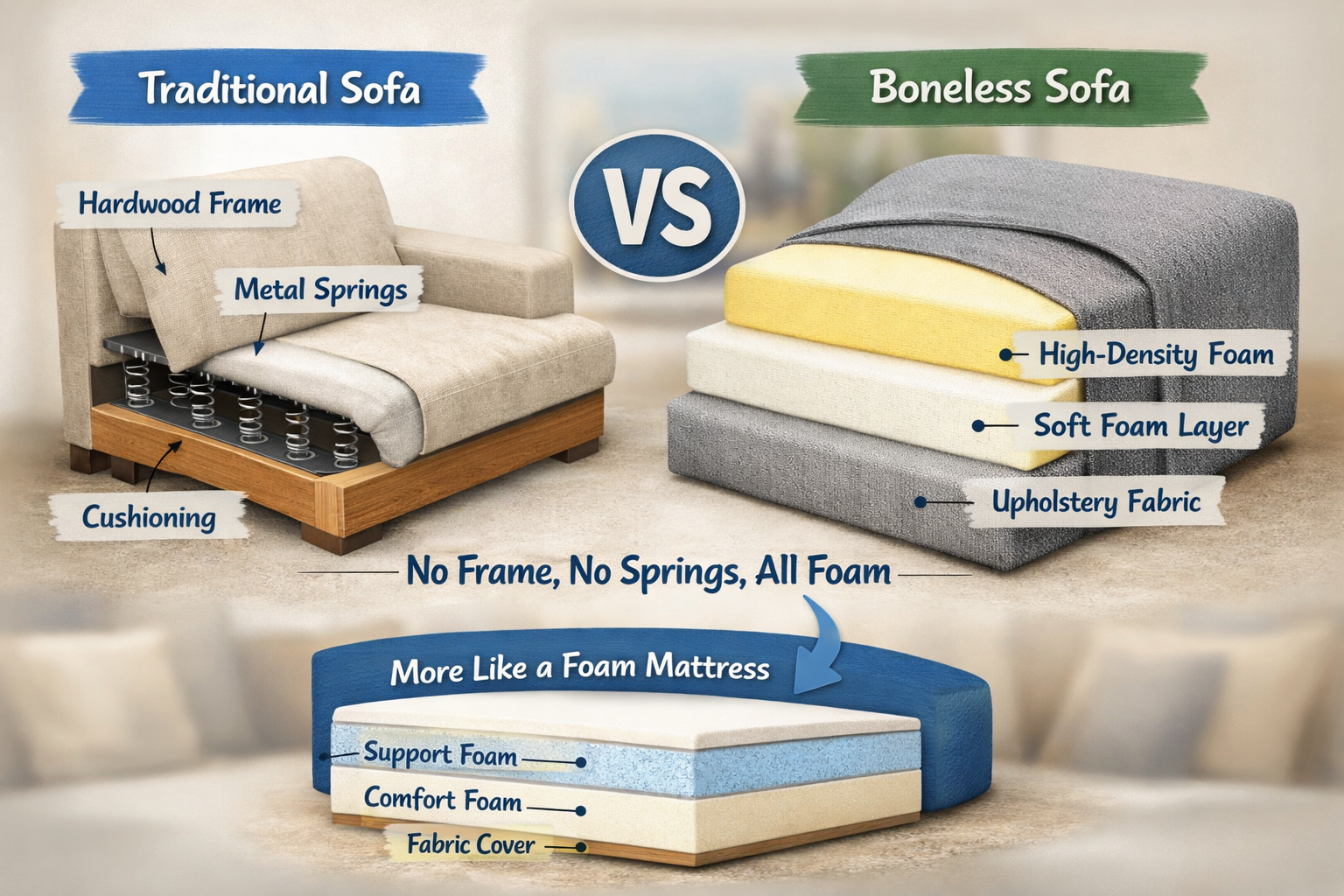
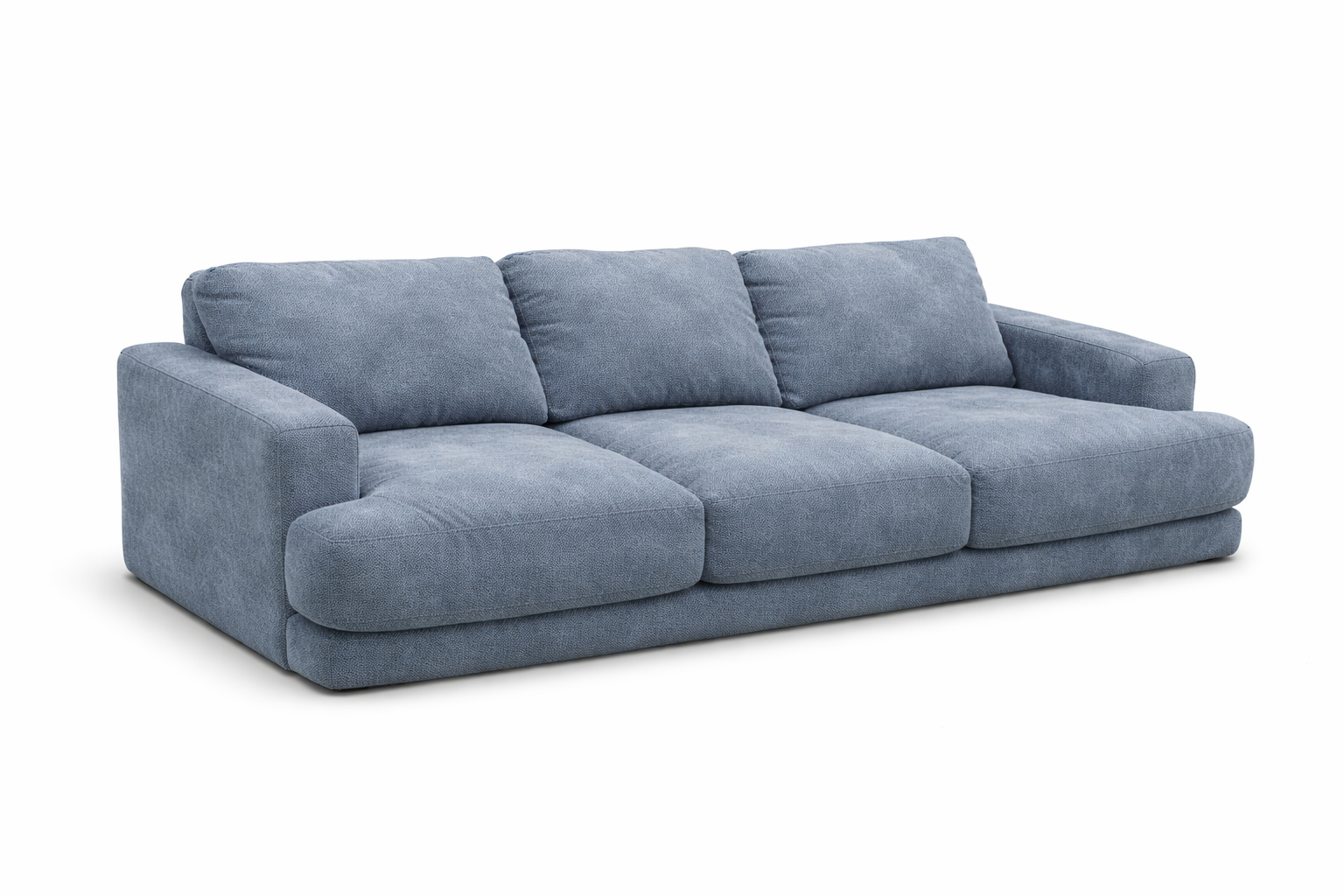
Technically speaking, Boneless Sofas do away with the structural components that characterize conventional seating. There is no suspension system, springs, metal reinforcement, or hardwood frame. Rather, layered polyurethane foam wrapped in upholstery fabric performs the entire load-bearing function. This transfers structural responsibility from rigid components to foam properties like density, recovery rate, and indentation load deflection (ILD). Put more simply, the foam’s ability to withstand compression and bounce back over time determines the shape, comfort, and longevity of the sofa.
That should sound familiar. Though they are cut, shaped, and upholstered differently, boneless sofas are conceptually more similar to foam mattresses than traditional couches.
Why Boneless Sofas Took Off So Quickly?
The strongest case for Boneless Sofas isn’t about comfort or aesthetics. It’s about logistics.Traditional sofas are notoriously difficult to transport. Anyone who has navigated a walk-up apartment or an older building with narrow hallways understands this pain. Boneless Sofas avoid this issue altogether by shipping compressed in boxes that one person can carry.Once inside, setup is straightforward. Cut the vacuum seal, give the foam time to expand, and the sofa takes shape on its own. There’s no assembly process to get wrong and no delivery appointment to wait around for.
Social media, particularly TikTok, amplified this advantage. The visual drama of a sofa “growing” out of a box made Boneless Sofas feel both futuristic and accessible—much like mattress-in-a-box products did a decade earlier.
Taking a seat: The intersection of theory and reality
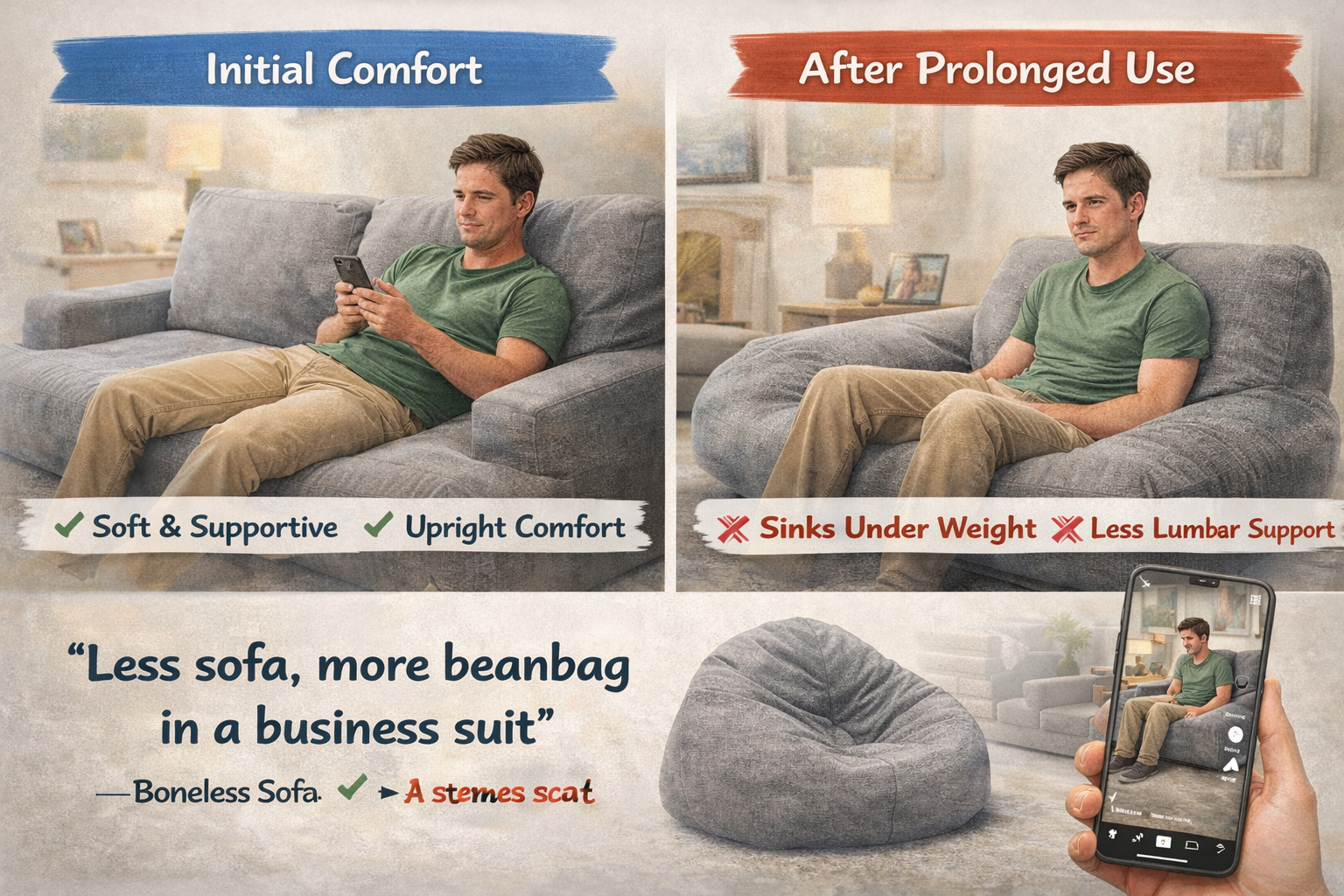
Boneless sofas are frequently seen favorably at first. The surface feels luxurious, the foam is soft, and the seating is comfortable. The comfort can feel immediate and forgiving for casual lounging, such as watching TV, reading, or scrolling through a phone. However, prolonged use reveals a more nuanced picture.
Unlike traditional sofas, Boneless Sofas compress under body weight because they lack an internal frame or suspension system. This may eventually result in a less defined and lower-feeling sitting position. There is little lumbar support, and sitting upright takes more effort from the user than from the furniture.
Boneless Sofas were famously described as “less sofa, more beanbag in a business suit” by one tester. Although it’s not perfect, the analogy is helpful. These couches have a structured appearance. They act more like large, upholstered cushions in terms of functionality.
Expectations determine whether that is a feature or a flaw.
Support and Ergonomics: A Use Case Question
Boneless Sofas emphasize envelopment over support from an ergonomic perspective. Instead of directing posture, the foam adjusts to the body. This can feel cozy and even opulent for brief periods of time. The absence of resistance becomes apparent during longer sessions, such as working on a laptop, entertaining guests, or sitting up straight.
This does not imply that Boneless Sofas are poorly made. It indicates that they are made for a distinct purpose. They perform best in casual environments where leisure is more important than posture. When asked to function like conventional seating designed for long-term, upright support, they falter.
Put another way, there are issues when boneless sofas are assessed according to the same standards as framed sofas.
Sturdiness and Foam Fatigue
When it comes to durability, skepticism is most appropriate.
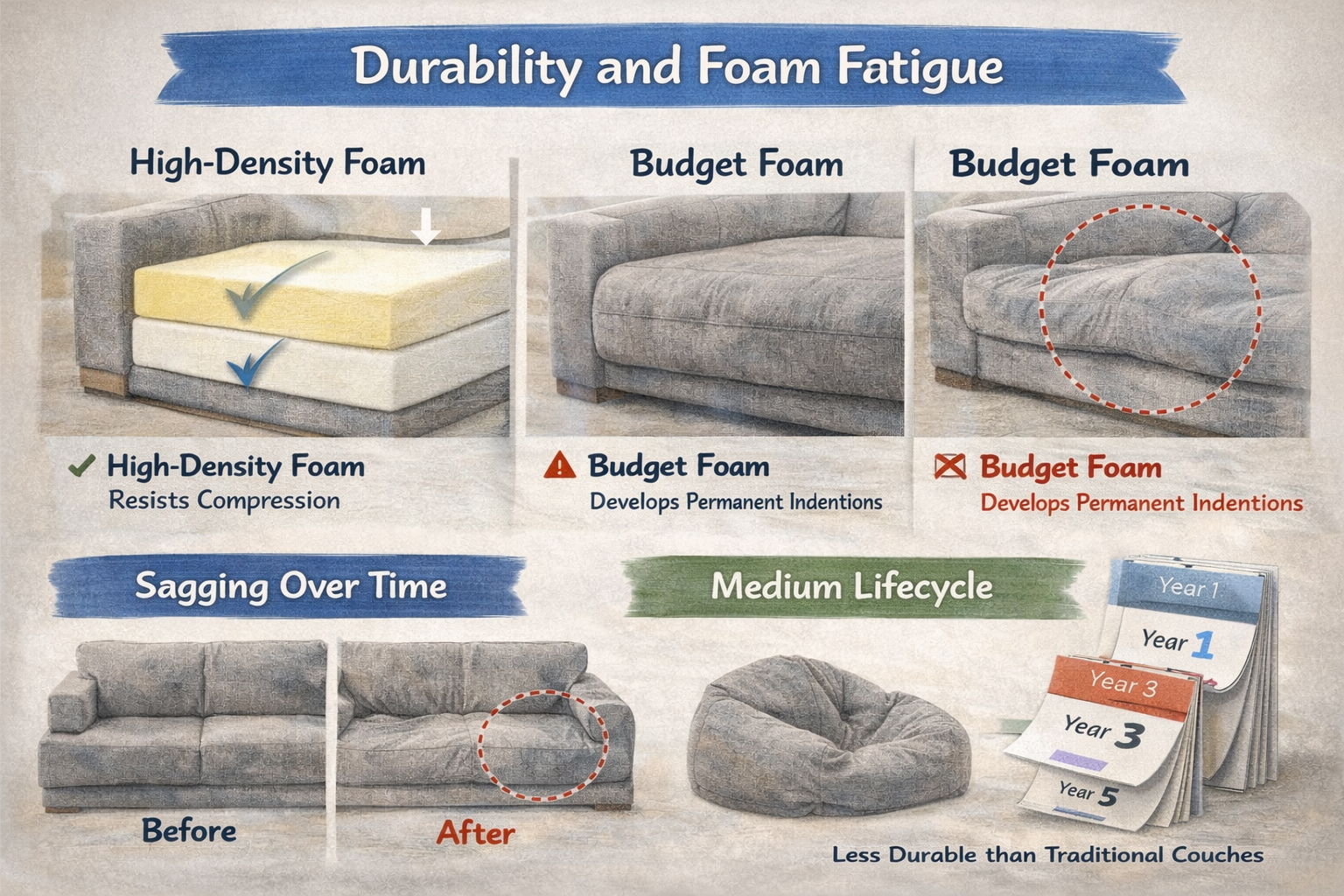
Since Boneless Sofas only use foam for structure, the foam’s quality affects their long-term performance. High-density multi-layer foam can tolerate compression and recover its shape rather well. Lower-density foam, which is more likely to result in permanent indentations, especially in high-use areas, is commonly used in budget models.
Unlike framed sofas, where worn cushions can be replaced without compromising the structure, foam-only designs show wear at the seating surface. Once sagging begins, there is little distinction between cosmetic wear and functional decline.
This suggests that Boneless Sofas should be considered medium-lifecycle furniture. They may last for years with moderate use, but they won’t last as long as a well-made traditional sofa.
Interior Design and Aesthetic Fit
Boneless Sofas look great in modern, minimalist spaces. Their low profiles, soft edges, and modular forms work in casual living spaces, media rooms, and apartments where flexibility is valued.
What they lack is visual authority. In formal living rooms or design-forward spaces, Boneless Sofas can feel understated—sometimes to the point of looking temporary. They are comfortable but rarely commanding.
This again reinforces the idea that they are not trying to replace traditional sofas but to coexist alongside them.
Who Boneless Sofas Actually Make Sense For
Boneless Sofas tend to work best for people whose priorities align with their design tradeoffs. That includes renters, frequent movers, and apartment dwellers with limited access. Families with young children may also appreciate the absence of hard edges and exposed legs.
They are less ideal for users who need strong back support, entertain formally, or expect furniture to last a decade or more without visible wear.
Understanding this distinction is key to satisfaction.
Trend or the Future?
Boneless Sofas are not a passing gimmick, but they are not the inevitable future of furniture either.
What they represent is a shift toward logistics-aware design—furniture engineered as much for shipping, access, and convenience as for comfort. That shift is real and likely permanent. But it doesn’t eliminate the need for framed sofas any more than mattress-in-a-box products eliminated traditional bedding.
Instead, Boneless Sofas occupy a growing niche, shaped by smaller living spaces and changing expectations.
Final Take
Boneless Sofas succeed when judged on their own terms. They fail when asked to behave like something they are not.
For buyers who value easy delivery, quick setup, and relaxed comfort, they can be a smart solution. For those seeking structure, posture support, and long-term durability, traditional sofas remain the better choice.
That balance—not hype or novelty—is why Boneless Sofas are likely to stick around. Not as the future of furniture, but as one credible answer to how people live today.
